
What Happens If I Ignore a Small Cavity?
January 15, 2026 9:00 amWhen you hear “cavity,” it’s easy to picture something dramatic — like a sudden toothache or an urgent dental visit. But small cavities don’t always make a fuss. Often they start as barely noticeable spots, and it’s tempting to think, If it doesn’t hurt, maybe it can wait. Trouble is, ignoring a small cavity isn’t like ignoring a stain on a shirt; it’s more like leaving a tiny crack in a windshield — it tends to grow over time, and once it spreads, the consequences are bigger and more involved.
At Bolt Family Dental in Brownsburg, IN, Dr. Wade Troyer helps patients understand what really happens when decay is left untreated. A cavity doesn’t just stay “small” forever — it interacts with the bacteria, enamel, dentin, and nerves in your tooth in ways that can escalate the problem. Let’s walk through what you can expect if a cavity goes unaddressed, stage by stage.
What a Cavity Really Is
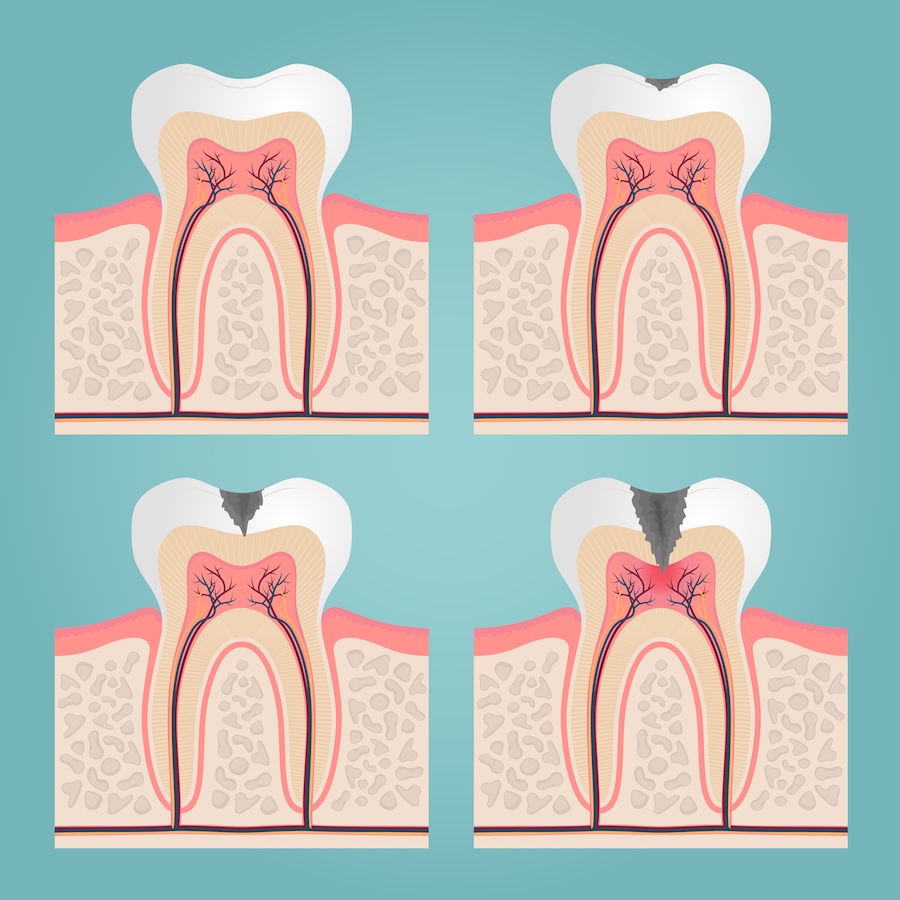
A cavity starts when decay breaches the outer layer of enamel. Enamel is tough — the hardest substance in the body — but it isn’t invincible. Sugars and acids from food and bacteria gradually wear it down. Once those acids create a tiny hole in the enamel, bacteria get in and begin eating away at the softer layer underneath (the dentin). That’s when decay becomes visible on an X‑ray or during a dental exam.
At first, this process can feel subtle or go unnoticed. But it doesn’t stay quiet forever.
Sensitivity to cold or sweet foods
A brief sharp sensation when biting down
Mild, intermittent discomfort
Persistent pain
Pain that keeps you awake at night
Sensitivity that lingers long after eating or drinking
A throbbing sensation
Constant, severe pain
Pus or a bad taste in your mouth
Swelling of the gums or face
Fever or general unwell feelings
Stage 1: Tiny Spot — Minimal Discomfort
Early on, a small cavity might not cause any discomfort. You might notice it only during a checkup or on an X‑ray. In this stage, the decay is limited to a small area of enamel, and restoring it with a simple filling is straightforward.
This is the part of the timeline where most people wish they had come in sooner — because treatment is simpler, faster, and less expensive.
Stage 2: Into the Dentin — Sensitivity Begins
Left untreated, decay progresses past enamel and hits the dentin layer. Dentin is closer to the inner parts of the tooth, and it’s more sensitive. At this point, you might notice:
This isn’t usually a sharp, constant pain yet — but it’s your body’s way of indicating that something has changed.
Once decay reaches the dentin, the risk of deeper problems goes up, and the filling needed may have to be larger or a dental crown to remove all the decay safely.
Stage 3: Near the Nerve — Pain Starts to Linger
If the cavity continues unchecked, it eventually approaches the pulp — the innermost part of the tooth where the nerve and blood vessels live. When decay gets close to or into this area, you may feel:
This is a sign the problem is no longer “small.” Once the nerve is involved, a simple filling won’t be enough. Typically, at this point, root canal therapy is needed to remove the infected or inflamed nerve tissue and preserve the remaining tooth structure.
Stage 4: Infection and Abscess – Serious Symptoms
An untreated cavity can eventually lead to a dental abscess — a pocket of infection at the root tip. Abscesses can cause:
At this stage, ignoring the tooth isn’t just risky for that one tooth — the infection can spread into surrounding bone, tissue, and even travel through the bloodstream. That’s not hypothetical; it’s a real reason why dental infections are treated as urgent.
An abscess usually requires more extensive care: root canal therapy combined with antibiotics, or in some cases, extraction if the tooth can’t be saved.
Why Early Treatment Matters
Here’s the part that often surprises people: treating decay early usually means less drilling, less time in the chair, and a lower cost. A small filling that takes 15–20 minutes to place can prevent hours of treatment and discomfort down the road.
Cavities aren’t lazy — they progress. Ignoring one just means the decay keeps moving inward, toward areas of the tooth that are more sensitive and more complex to treat.
Is There a Way to Slow or Reverse Early Decay?
In the very earliest stages — before a cavity forms — demineralized enamel can sometimes be re-hardened. Fluoride treatments, improved brushing habits, and remineralizing toothpastes can help stop decay from progressing. Some newer treatments, like Curodont, are being used in select cases to support enamel repair when caught very early.
Once a true cavity exists (a hole in the enamel), however, a dental filling is the only reliable way to remove decay and restore the tooth. Preventive care works best before that point — which is why early detection really matters.
How to Know What’s Going On With Your Tooth
If you’re wondering whether your discomfort is a “small cavity” or something more, pay attention to:
How long the pain lasts after eating or drinking
Whether pain shows up with pressure, cold, or sweets
Whether the sensation is sharp, dull, or throbbing
Any visible change in the tooth’s appearance
And remember: absence of pain doesn’t mean absence of decay. Cavities can be silent — which is why routine checkups and X‑rays at Bolt Family Dental are so valuable.
What Happens If You Ignore a Small Cavity — In a Nutshell
Leaving a small cavity untreated is like letting a small crack in a foundation widen before fixing it: eventually, the damage can reach deeper layers, involve nerves, and lead to infection. That usually means more involved treatment — and more time out of your day.
If you’ve noticed sensitivity, intermittent pain, or you think you might be due for a checkup, call Bolt Family Dental in Brownsburg, IN. Dr. Wade Troyer can assess your teeth, explain what’s going on, and help you decide on the right treatment — without guesswork.
Schedule a visit today so a small spot stays just that — small.