
Lost Filling or Crown? Here’s What to Do Next
June 23, 2026 9:00 amA lost filling or crown tends to happen at the worst possible time. You are chewing lunch, having dinner with friends, or biting into something you have eaten a hundred times before. Then something feels loose. Maybe you hear a little crack. Maybe you feel a hard piece in your mouth and realize it is not food.
At that point, the tooth may feel rough, hollow, sensitive, or just plain strange. It can also be tempting to put off calling because there is no major pain yet. However, a filling or crown that has come out leaves part of the tooth exposed, so it is worth dealing with sooner rather than later.
The good news is that there are a few simple things you can do at home to protect the tooth until you can be seen. Then, at Bolt Family Dental in Brownsburg, IN, Dr. Wade Troyer can examine the tooth, look at the restoration, and decide whether it can be repaired, re-cemented, or needs to be replaced.
Take the Filling or Crown Out of Your Mouth
If the filling or crown came loose while you were eating, take it out of your mouth and set it aside. You do not want to accidentally swallow it, bite down on it again, or leave it sitting in your cheek while you are trying to figure out what happened.
For a crown, rinse it gently with water and place it in a small container or bag. Then bring it with you to the appointment. Sometimes the crown can be cleaned and re-cemented, especially if it is still in good shape and the tooth underneath has not changed too much.
A lost filling is a little different. Tooth-colored fillings usually cannot be placed back into the tooth once they have fallen out. Still, if you find the piece, bring it in. It may give Dr. Troyer a better idea of what happened and whether the tooth broke around the old filling.
Try not to scrub the crown with a toothbrush or use anything sharp to clean inside it. A quick rinse is enough for now. The goal is simply to keep it safe until the dentist can take a look.
Keep the Tooth Clean, but Be Gentle
Once a filling or crown is gone, the tooth may have a rough edge or an open area that catches food. That can feel annoying right away, but it can also allow bacteria and debris to collect around the exposed part of the tooth.
Brush the area gently with a soft toothbrush. You do not need to scrub hard because the tooth feels different. In fact, brushing too aggressively can make sensitivity worse if the inner part of the tooth is exposed.
Rinsing with warm salt water can also help keep the area clean. Mix a small amount of salt into warm water, swish gently, and spit it out. This can be especially helpful after meals if food keeps catching around the tooth.
Floss carefully around the area too, although you may want to avoid snapping floss down hard if the tooth is sore or the edge feels fragile. Instead, pull the floss through from the side. It is a small adjustment, but it can help you avoid tugging on a weak edge or irritating the gums.
Try Not to Chew on That Side
A tooth that has lost a filling or crown needs a little extra caution for the moment. The filling may have been sealing a cavity or chipped area. The crown may have been covering a tooth that was already cracked, heavily filled, or more likely to break under pressure. Either way, that tooth is now taking on everyday chewing without the protection it had before.
Until the tooth is repaired, chew on the other side when you can. Also, stick with softer foods for a few days if the tooth feels sensitive or if a large part of it is missing. Eggs, yogurt, pasta, cooked vegetables, soup, rice, and softer proteins are usually easier on the tooth.
For now, skip foods that make you bite down hard, such as ice, nuts, hard candy, popcorn kernels, crusty bread, and anything else that puts a lot of force on that side. Sticky foods can cause trouble too because they may pull on a weakened tooth or get packed into the open area.
You do not have to live on soup until your appointment. Still, this is probably not the week to test that tooth with a handful of trail mix.
Do Not Try to Glue the Crown Back With Household Adhesive
A loose crown can make people want to fix it themselves right away. That urge makes sense, especially if the crown keeps coming off or the tooth is sensitive when air hits it. However, household glue, craft glue, super glue, and similar products should never go in the mouth.
Those products are not made for dental use. They can irritate the gums, damage the tooth, make the crown harder to remove later, and create a bigger mess than the one you started with.
Temporary dental cement is sold in some pharmacies, and in certain situations, it can be used as a short-term option. Even then, it is better to call the dental office first. The tooth may need to be checked before anything is placed back over it, especially if there is pain, a crack, or signs that decay developed underneath the crown.
A crown that keeps coming off is usually trying to tell you something. Maybe the cement has worn down. Maybe the tooth underneath changed. Or maybe there is decay, grinding, clenching, or a bite issue involved. Putting the crown back on without checking the cause may buy a little time, but it does not fix the reason it loosened in the first place.
A Lost Filling and a Lost Crown Are Not Quite the Same
A filling and a crown both repair a tooth, but they cover different amounts of tooth structure.
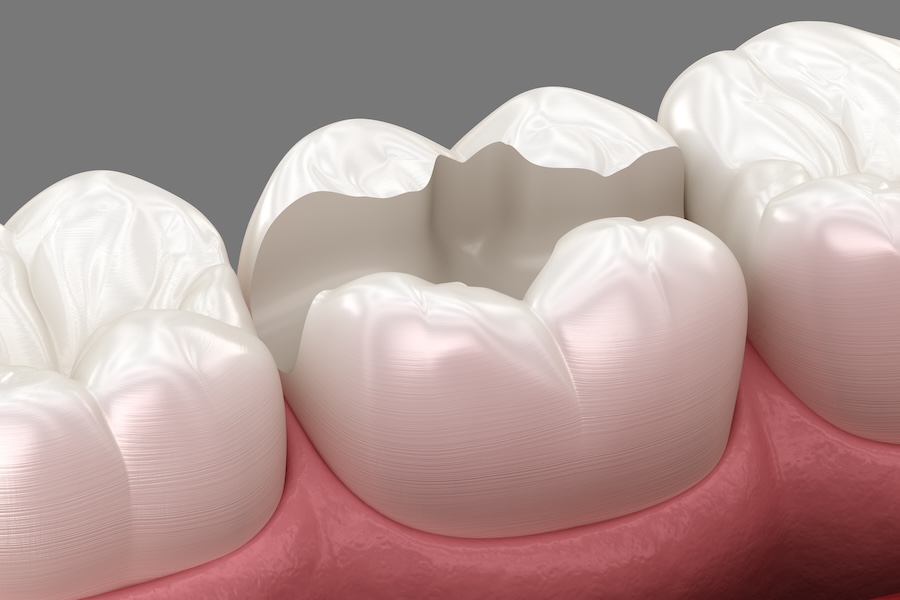
A filling repairs a smaller area. It may replace decay, smooth out a chipped spot, or seal an area that has been cleaned out after a cavity. When a filling falls out, you may notice a hole, rough edge, food catching, or sensitivity to cold and sweets.
A crown covers most or all of the visible part of the tooth above the gumline. Crowns are often used when a tooth has a large filling, a crack, a root canal, a major fracture, or not enough healthy tooth left to support another filling. When a crown comes off, the tooth underneath may look smaller, darker, or shaped a little differently than you expected.
Both situations need attention. However, a lost crown may leave more of the tooth exposed, especially if the tooth underneath was already weak. Because of that, it is better not to wait weeks just because the tooth is not hurting much yet.
Why Did the Filling or Crown Come Out?
Restorations do not usually come out for no reason, although sometimes it is hard to tell what started it.
For fillings, one common cause is new decay around the edges. Over time, bacteria can work into a weak spot between the filling and the tooth. Then the filling may loosen, the tooth may break around it, or part of the restoration may come out when you chew.
Crowns can loosen because the cement has worn down, but that is not the only reason. Decay under the crown, a cracked tooth, grinding, clenching, or changes in the bite can all play a part. In some cases, the crown is still intact, but the tooth underneath has changed enough that it no longer fits the way it should.
Sticky foods can also pull a crown loose. Caramel, chewing gum, taffy, and similar foods have more pulling power than people expect. However, if a crown comes off while eating something soft, there may already have been an issue underneath.
Dr. Troyer can look at the tooth, the crown or filling, and the surrounding gums to sort out what happened. Sometimes the solution is simple. Other times, the tooth needs more than putting the old restoration back in place.
Watch for Signs You Need to Be Seen Quickly
A lost filling or crown should be checked soon, even if you are not in pain. However, certain symptoms can mean you should call the office promptly rather than waiting for a routine opening.
Call Bolt Family Dental if you have swelling in the gums, face, or jaw. You should also call if pain is severe, keeps you awake, or gets worse when you bite down. A bad taste, drainage near the tooth, fever, or a tooth that feels loose can also point to a more serious issue.
Sensitivity that lasts for more than a few seconds after cold or heat may be another sign the tooth needs attention. A quick zing is one thing. However, pain that hangs around after a sip of coffee or cold water is different and deserves a closer look.
Also, if the tooth has a sharp edge that is cutting your tongue or cheek, mention that when you call. The office can help you decide how soon you should be seen and what to do in the meantime.
What Will the Dentist Do at the Appointment?
The first step is figuring out what condition the tooth is in. Dr. Troyer may take an X-ray, check for decay, look for cracks, and see how the tooth fits with the teeth around it.
If a crown came off and both the crown and tooth are in good shape, it may be possible to clean the area and re-cement the crown. That is usually the simplest outcome. However, if there is decay underneath, if the tooth broke, or if the crown no longer fits, a new crown may be needed.
For a lost filling, the dentist may place a new filling if enough healthy tooth remains. On the other hand, if the cavity is large or the tooth has lost a lot of structure, a crown may be the better option because it provides more coverage.
Sometimes the tooth needs a temporary repair first, especially if more treatment is needed before the final crown or filling can be placed. The plan depends on what is happening under the surface, not only on what the tooth looks like from the outside.
Can You Wait Until It Starts Hurting?
It is understandable to think about waiting if there is no pain. Dental appointments take time, and a missing filling or crown can feel like one more thing on an already busy list.
The problem is that pain is not always the first sign that a tooth is getting worse. Decay can continue around an exposed area without causing much discomfort. A crack can also deepen with regular chewing. Then what may have been a filling repair can turn into a larger restoration, a root canal, or even a tooth that is harder to save.
Getting it checked early does not mean the news will automatically be serious. It simply gives the dentist a chance to handle the issue before the tooth has been working without its protection for too long.
Lost Filling or Crown Repair in Brownsburg, IN
A lost filling or crown is not something to ignore, but you do not need to panic either. Save the crown if you find it, keep the tooth clean, avoid chewing on that side, and skip the household glue. Then call the dental office so the tooth can be checked before a small issue has more time to grow.
At Bolt Family Dental in Brownsburg, IN, Dr. Wade Troyer can evaluate the tooth, explain what caused the filling or crown to come loose, and recommend the next step. Call to schedule an appointment, especially if you have pain, swelling, a sharp edge, or trouble chewing.
FAQs
Can I put my crown back on myself?
Do not use super glue, craft glue, or any household adhesive. Temporary dental cement may be available at a pharmacy, but call the dental office first because the tooth and crown may need to be checked before it is placed back on.
What should I do if I swallowed my crown?
Call the dental office and let them know. In many cases, swallowing a crown is not dangerous, but the dentist will still need to replace it or decide whether a new crown is needed.
Can a crown be reused after it falls out?
Sometimes. If the crown is intact and the tooth underneath is healthy, the dentist may be able to clean it and re-cement it. If there is decay, damage, or a poor fit, a new crown may be needed.
Why is my tooth sensitive after a filling falls out?
A lost filling can expose a part of the tooth that is more sensitive to cold, heat, sweets, air, or pressure. The sensitivity may also mean decay or a crack has reached deeper into the tooth.
How long can I wait to replace a lost filling?
It is best to call soon rather than waiting for pain. The exposed tooth can collect food and bacteria, and the area may become more damaged with regular chewing.
Can I eat with a lost crown?
You can usually eat softer foods while you wait to be seen, but chew on the opposite side and avoid hard, sticky, or crunchy foods.
Categorised in: Dental Crowns, Dental Fillings, Dental Tips, Restorative Dentistry